At Creativeit we perform specialized vibration services on rotating equipment and structures, using the latest measurement instruments on the market.
Condition Monitoring
It makes it possible to know the mechanical condition of a machine in real time. It is used in:
- Power generation plants
- Refineries and petrochemical plants
- Cement plants
- Mining
- Paper industry
- Quality Control
- During the manufacture of motors or components, vibration analysis is used to validate their balancing and assembly.
Fault Diagnosis
The analysis helps identify:
- Dynamic imbalance
- Shaft misalignment
- Mechanical looseness
- Bearing damage
- Pump cavitation
- Electrical faults in motors
- Benefits of Vibration Analysis
- Fewer unplanned shutdowns
- Longer asset service life
- Lower corrective maintenance costs
- Improved industrial safety
- Greater equipment availability and reliability
- Data-driven decision-making
Tools and Equipment Used
- Triaxial accelerometers
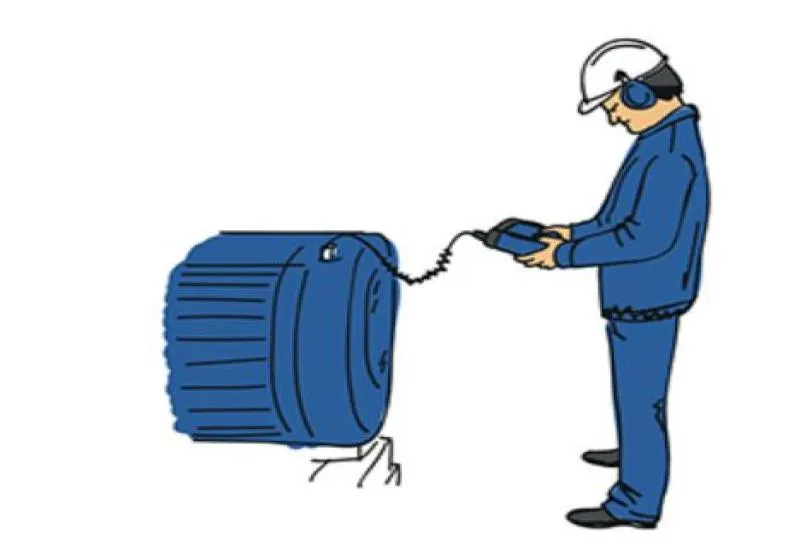
- Portable data collectors
- Spectrum analyzers
- Monitoring software (e.g., SKF, Emerson CSI, Pruftechnik, Fluke)
- Online condition monitoring systems
Regulations and Standards
- ISO 10816 / ISO 20816: Defines acceptable vibration levels.
- ISO 7919: Application for rotating machines with rotating shafts.
Vibration Severity Charts: Practical guides for interpreting values.
Industry Use Case Example: Cement plant
Problem: Recurring failures in the main kiln fan.
Solution applied:
- Vibration analysis was performed on bearings and couplings.
- Angular misalignment and loose bolts were detected.
- The alignment was corrected and the connections were secured.
- The vibration level was reduced from 18 mm/s RMS to 4 mm/s.
Results:
- Elimination of excessive vibration.
- Improved energy efficiency.
- Reduced risk of catastrophic failure.
- Technology Trends
- Wireless sensors with IoT
- Predictive analytics with Artificial Intelligence
- Remote cloud monitoring
- Digital twins for simulating vibration behavior
- Integration with SCADA and ERP systems
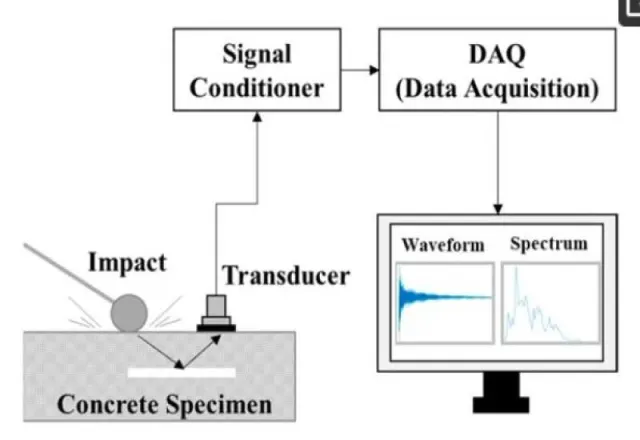
Vibration Analysis is a technique used to identify and predict mechanical anomalies in industrial machinery by measuring vibration and identifying the frequencies involved. These vibrations are recorded by one or more accelerometers and the data is processed by a spectrum analyzer.
Vibration analysis is a technique used to evaluate the dynamic behavior of mechanical systems, such as rotating machinery or structures. It is based on the study of the mechanical vibrations generated by these systems and can provide a great deal of useful information about their operating condition and health.
In general terms, it involves the following steps:
Data acquisition: Sensors, such as accelerometers or velocity sensors, are used to measure vibrations at different points of the system. These sensors can be mounted directly on the machinery or at strategic points of the structure.
Signal processing: The collected data is processed to extract relevant information. This can include removing noise, filtering out unwanted frequencies and converting the data into forms that are easier to analyze.
Spectral analysis: Fourier analysis or another type of spectral analysis is performed to break the vibration signals down into their frequency components. This reveals the dominant frequencies and their amplitudes, which can indicate the presence of problems such as imbalance, misalignment, looseness, bearing defects, among others.
Interpretation of results: The processed data and the results of the spectral analysis are interpreted to assess the health of the system. This can involve comparing the characteristics of the measured vibrations against reference criteria or predefined thresholds, or using advanced diagnostic techniques to identify specific problems.
Corrective actions: Depending on the results of the analysis, corrective actions may be necessary to address any problem detected. This could include adjusting mechanical components, replacing worn or defective parts, or scheduling preventive maintenance.
In summary, these tests are a powerful tool for monitoring the health of mechanical systems and structures, identifying developing problems and taking proactive measures to avoid costly failures and unplanned downtime.
Types of faults identified by vibration analysis:
There are several characteristic faults in machine rotation that can be identified by measuring and analyzing the vibration generated by the machine:
- Unbalanced machine
- Misaligned machine
- Resonance
- Bent shafts
- Gear mesh disturbances
- Poor condition of bearings and bushings
- Blade pass disturbances
- Vane pass disturbances
- Proper equipment mounting
- Electromagnetic faults
- Recirculation and Cavitation
- Motor faults (rotor and stator)
- Bearing faults
- Mechanical looseness
- Critical machine speeds
- Condition of lubricants