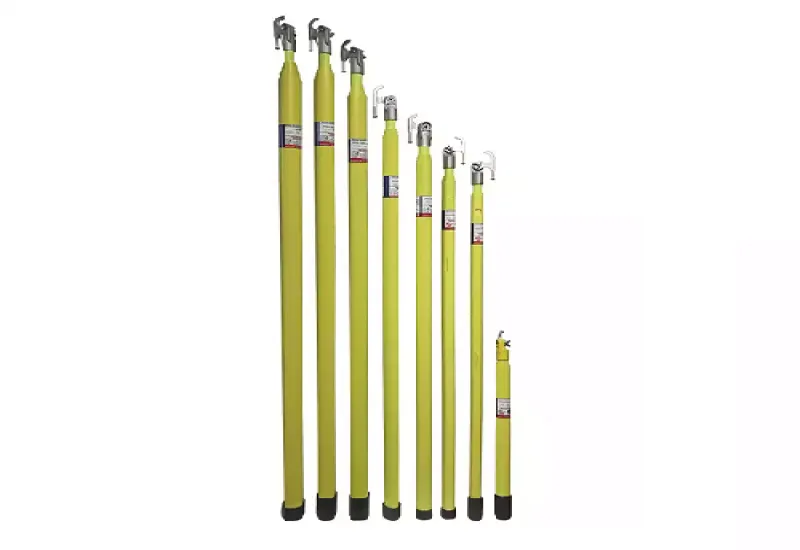
Applying the international standards IEEE 978, ASTM F711, and IEC 855. Verification by electrical testing of hot sticks is crucial to ensure the safety of workers operating in high-voltage environments, such as transmission and distribution power lines.
Electrical verification tests of hot sticks (also known as electrical insulation tests) are essential to ensure that the hot sticks used in high-voltage electrical work are in suitable condition to prevent accidents. These hot sticks are tools used to work safely at great heights or near high-voltage lines without direct contact.
Types of verification tests for electrical hot sticks:
- Insulation test:
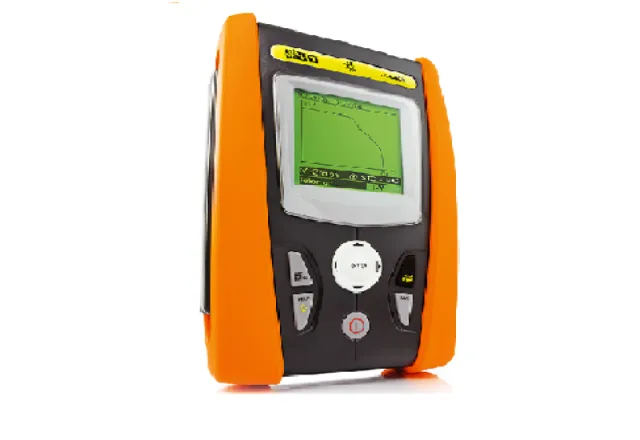
- This test is performed to verify the insulation capability of the hot stick. A megohmmeter (insulation resistance tester) is generally used to measure the resistance of the hot stick.
- A test voltage is applied, normally 5 kV or more depending on local regulations, and the resistance is measured. The minimum acceptable resistance is generally 1 megohm (MΩ) or more, although this may vary according to the regulations of each country.
- If the insulation resistance is below the required value, the hot stick will not be safe for use and must be repaired or removed from service.
- Dielectric breakdown test:
- This test is performed to make sure the hot stick does not fail under high voltage. The hot stick is subjected to a voltage much higher than it would normally handle during use (for example, up to 15 kV or more) to confirm it can withstand these voltages without breaking down.
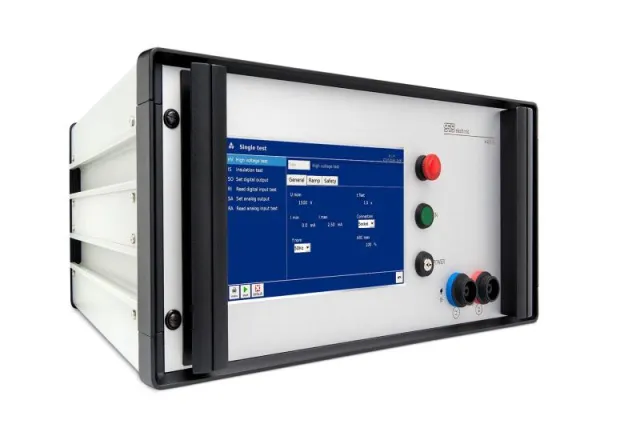
- The test is carried out on specialized equipment that verifies the hot stick shows no current leakage or deterioration of its insulating material.
- Mechanical strength test:
- Although it is not a direct electrical test, the hot stick is checked for suitable mechanical condition, since cracks, dents, or wear can compromise its insulating capability and structural integrity. Visual inspections and physical bending tests are usually performed.
- Visual inspection:
- It is important to perform frequent visual inspections to detect any surface damage, such as cracks, wear, or deterioration of the insulating materials (generally fiberglass or polymers). Any imperfection could be a sign that the hot stick is no longer safe for use.
- Partial discharge test:
- Under some advanced standards, tests can be performed to detect partial discharges in the insulation of hot sticks. Partial discharges are indications of a defect in the insulating material, which could lead to a failure in the future.
General procedure for testing electrical hot sticks:
- Preparation:
- Disconnect the hot stick from any energy source.
- Make sure the hot stick is clean and free of contaminants (water, oil, dirt).
- Verify that there is no visible damage that could compromise the test.
- Applying the test voltage:
- Connect the test equipment (megohmmeter or high-voltage generator) to the hot stick.
- Perform the insulation test by applying the appropriate voltage.
- Evaluating the results:
- If the measured resistance is adequate, the hot stick passes the test.
- If the test shows poor results (resistance too low), the hot stick must be removed from service and repaired.
- Documentation:
- Record the test results, including measured values and the inspection date. This is important for preventive maintenance and future audits.
Test frequency:
- Hot sticks must undergo periodic testing according to use and local regulations. It is generally recommended to test at least once a year or whenever possible deterioration is noticed.