A transformer can run trouble-free for years and then fail within weeks once its insulating oil loses dielectric strength. The breakdown voltage test is the fastest way to find out whether the oil can still withstand the electrical stress it was designed for. The catch is that three widely used methods exist — ASTM D877, ASTM D1816 and IEC 60156 — and their results are not interchangeable. This guide covers how they differ, when each one applies, and what it takes to get a number you can actually trust.
What the breakdown test actually measures
An oil sample is poured into a test cell with two electrodes set at a fixed gap. The tester ramps AC voltage at a constant rate until an arc forms between the electrodes; that voltage, in kV, is the breakdown voltage. New, clean, dry oil has high dielectric strength. Dissolved or free water, particles (cellulose fibers, carbon, metal), sludge and air bubbles all pull it down.
Keep in mind what the test does not tell you: it does not identify the cause of degradation, and it will not catch incipient internal faults. That is the job of Karl Fischer water content (ASTM D1533), acid number (ASTM D974), interfacial tension (ASTM D971), liquid power factor and dissolved gas analysis (IEEE C57.104).
ASTM D877 vs ASTM D1816 vs IEC 60156
All three measure the same property in principle, but they change electrode shape, gap, voltage ramp rate and number of breakdowns. The same oil will read differently under each method, so only compare results run under the same procedure.
| Parameter | ASTM D877 | ASTM D1816 | IEC 60156 |
|---|---|---|---|
| Electrodes | 1 in (25.4 mm) flat disks with square edges | VDE spherically capped (“mushroom”), 36 mm diameter | Spherical or spherically capped |
| Gap | 0.100 in (2.54 mm) | 0.040 in or 0.080 in (1 mm or 2 mm) | 2.5 mm |
| Ramp rate | 3 kV/s | 0.5 kV/s | 2 kV/s |
| Stirring | No | Yes, with impeller | Optional |
| Reported value | Average of 5 breakdowns | Average of 5 breakdowns | Average of 6 breakdowns |
D877’s flat disks create a non-uniform field at the edges, which makes the method relatively insensitive to low levels of dissolved water and fine particles. D1816’s VDE electrodes, combined with stirring and a slow ramp, give a more uniform field and pick up early contamination far better. IEC 60156 is the reference method in European specifications and for many Asian transformer manufacturers.
When to use each method
- ASTM D877: a reasonable screening test for in-service oil in distribution equipment, for catching gross contamination, and for keeping trend continuity when all your historical data was taken this way.
- ASTM D1816: the right choice for new oil after processing (filtered, degassed, dried), for acceptance testing before filling, and for power and high-voltage transformers, where small amounts of moisture or particles already matter. IEEE C57.106 publishes new and in-service oil limits based on this method.
- IEC 60156: when the transformer OEM, the project specification or a European or Asian headquarters calls for it, typically with acceptance criteria from IEC 60296 or IEC 60422.
If you run a plant in Mexico, you will also see NMX-J-123-ANCE, the Mexican standard for mineral insulating oil, referenced in purchasing and receiving documents. Acceptance limits depend on voltage class, oil type and governing standard, so take them from the OEM or the applicable guide rather than a generic number.
Sampling: where most bad results come from
Poor sampling produces a falsely low reading — or worse, a falsely high one. The reference practice is ASTM D923. What matters most:
- Use clean, dry containers: amber glass bottles or gas-tight glass syringes. Avoid plastics that let moisture through.
- Flush the sampling valve before filling to clear water and sediment sitting in the dead leg.
- Don’t sample in rain, fog or high humidity without protection; oil picks up water from the air quickly.
- Record oil and ambient temperature — the relative saturation of water in oil changes with temperature.
- Fill with minimal headspace and seal immediately. If the sample is cold, let it warm to lab temperature while still sealed to avoid condensation.
- Gently invert the container before filling the cell to homogenize it without trapping bubbles.
What drives the result
Moisture. The dominant factor. What counts is not just ppm but relative saturation: the same water content is more harmful at low temperature, because the oil is closer to saturation. That is why water by Karl Fischer should be run alongside breakdown.
Particles. Cellulose fibers from paper insulation, carbon from tap changer arcing, metal fines. Their effect multiplies when moisture is also present — wet fibers tend to line up in the field and bridge the gap.
Bubbles and gas. A cell filled in a hurry, or freshly degassed oil handled carelessly, gives low and scattered breakdowns.
Cell and electrodes. Pitted or poorly polished electrodes, or a gap out of tolerance, invalidate the test. Verify the gap with feeler gauges and rinse the cell with the oil being tested.
Scatter. If individual breakdowns vary widely, the average isn’t representative. The standards include statistical criteria for deciding when to retest with a fresh filling.
How often to test
There is no single interval. Common practice is to include breakdown voltage in an annual oil analysis for power transformers and critical distribution units. Test more often, or right away, when:
- A new or repaired transformer is about to be energized, or oil has been processed or topped off.
- After a fault, a protection trip or abnormal operation.
- A previous result showed a downward trend, or water content is rising.
- Units run heavily loaded, sit in humid environments or have spent silica gel breathers.
A single value says less than a trend: same method, same sampling point and comparable conditions year over year.
Pre-test checklist
- Method defined (D877, D1816 or IEC 60156) and whose acceptance criteria apply (OEM, IEEE C57.106, IEC 60422, internal spec).
- Clean, dry container; valve flushed; temperatures recorded.
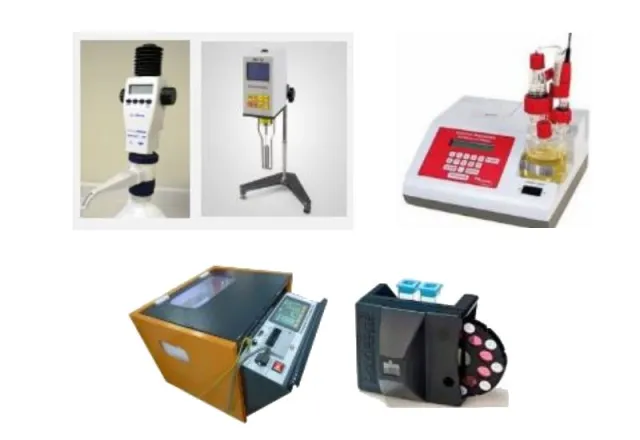
- Companion tests requested: water, acid number, IFT, color, DGA.
- Prior results on hand for trending.
- Sampling on energized or de-energized equipment done by qualified personnel, with lockout/tagout where required.
FAQ
Can I compare an ASTM D877 result with an ASTM D1816 result?
Not directly. Electrode geometry, gap and ramp rate differ, so the kV values aren’t equivalent. For trending, stick to one method.
Does breakdown testing replace dissolved gas analysis?
No. Breakdown voltage tells you how well the oil insulates; DGA detects internal faults such as overheating or arcing. You need both.
Can the test be done in the field?
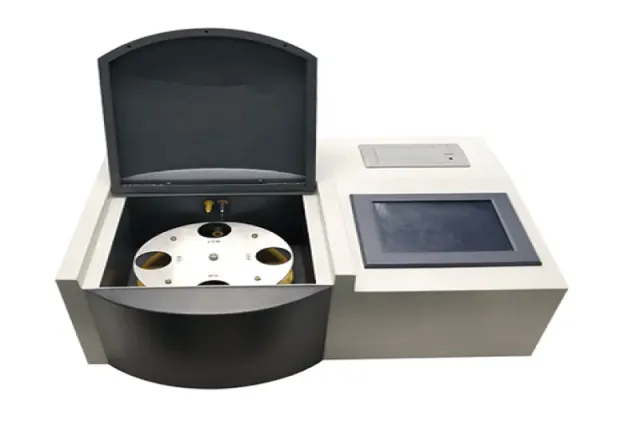
Yes, with automatic portable testers, as long as sample and cell contamination are controlled. For high-stakes decisions such as new oil acceptance, a controlled environment is preferable.
CreativeIT Group performs transformer oil breakdown voltage testing on site anywhere in Mexico or at our lab in Monterrey, using automatic testers with results traceable to NIST. If your auditors or headquarters require it, you can witness transformer oil testing in person or receive full photo and video documentation. We also supply oil acidity testers to round out your maintenance program. Request a quote — our engineers do the analysis themselves and reply the same day.