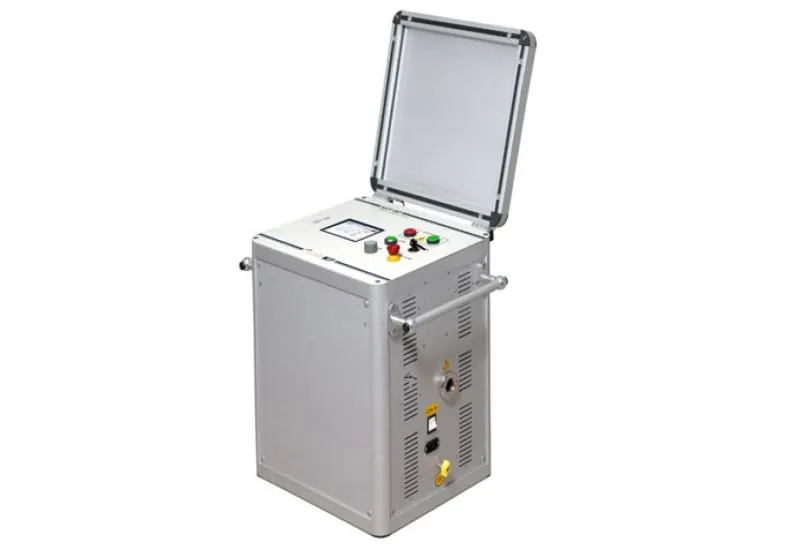
We perform tests in accordance with the IEEE 400.1, IEC 60502-2 and IEEE 400 standards. Very low frequency (VLF) tests on cross-linked polyethylene (XLPE) insulation are high-voltage tests used to evaluate the integrity and dielectric strength of cables insulated with cross-linked polyethylene, a material commonly used in high-voltage cables.
Very Low Frequency (VLF) Testing
VLF tests involve applying alternating current (AC) voltages at very low frequencies, generally in the range of 0.1 Hz to 1 Hz, although they can sometimes be higher. These tests are typically performed at voltages above the nominal voltage of the electrical system in which the cables will be installed, which makes it possible to detect potential defects or weaknesses in the insulation.
VLF tests are particularly useful because they offer several advantages over traditional direct current (DC) tests. For example, the equipment used for VLF testing is more compact and lightweight, which makes it easier to transport and use in the field. In addition, VLF tests can provide more reliable and repeatable results, and they are less likely to damage cable insulation than DC tests.
Cross-Linked Polyethylene (XLPE) Insulation
Cross-linked polyethylene (XLPE) is a type of insulation used in high-voltage cables. This material is characterized by its high dielectric strength and its ability to withstand high voltages without degrading. The cross-linking process involves modifying the molecular structure of polyethylene to increase its thermal resistance and improve its dielectric properties.
XLPE-insulated cables are widely used in electrical power transmission and distribution systems because of their durability and reliability. However, it is important to perform periodic tests to verify the integrity of the insulation and ensure safe, efficient operation of the electrical system.
VLF Testing of XLPE Insulation
VLF tests on cross-linked polyethylene insulation are performed by applying very low frequency voltages to the cables to evaluate their dielectric strength. These tests can detect potential defects in the insulation, such as air bubbles, impurities or discontinuities in the material. In addition, VLF tests can help identify cables with degraded or aged insulation that may pose a risk to the safety and reliability of the electrical system.
In summary, very low frequency testing of cross-linked polyethylene insulation is an important tool for ensuring the integrity and performance of high-voltage cables in electrical transmission and distribution systems. These tests help identify potential insulation problems and prevent catastrophic failures that could result in power outages or damage to infrastructure.