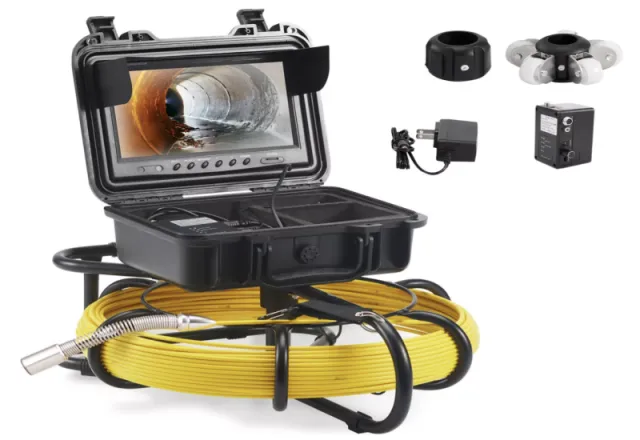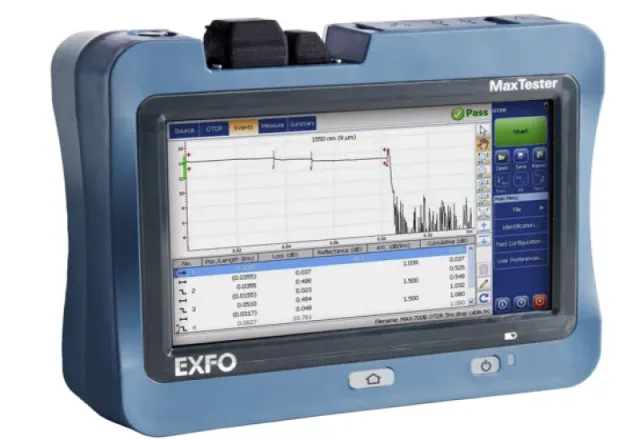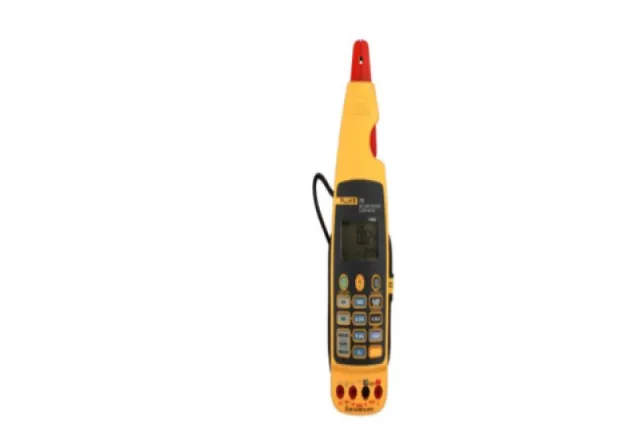
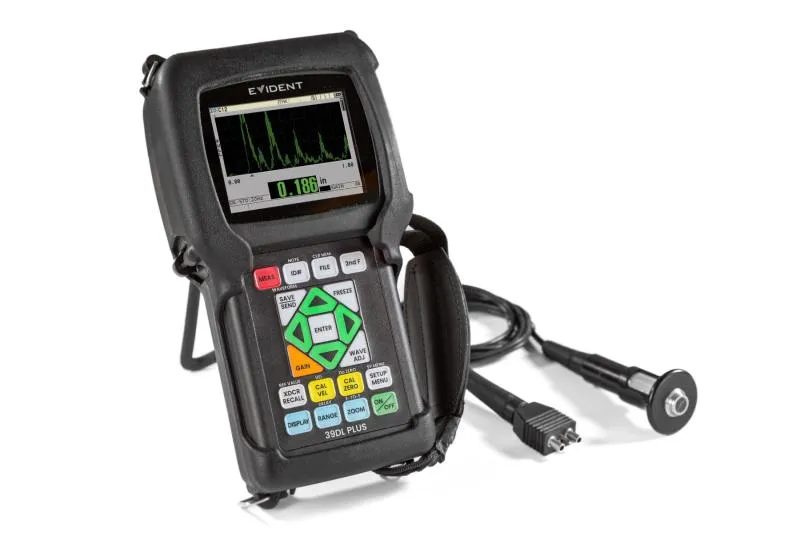
We have equipment for measuring material thickness.
A thickness gauge (also called a thickness meter or material thickness gauge) measures the thickness of a material or layer. Depending on the type of gauge, it can be used on a wide variety of materials and applications. Here are the main types and what they measure:
What Does It Measure?
The physical thickness of a material or coating, such as:
- Thickness of metals, plastics, glass or ceramics
- Thickness of paint or protective coatings (such as galvanizing, anodizing, etc.)
- Thickness of pipe walls or tanks
- Thickness of sheets or thin films
- Thickness of corrosion or material loss in metal structures
Types of Thickness Gauges and How They Work:
- Ultrasonic
- For solid materials (metals, plastics, glass, etc.)
- Uses ultrasonic waves to measure from one side of the material only.
- Advantage: No access to both sides of the object is needed.
- Electromagnetic or magnetic induction
- For measuring coatings on ferrous metals (steel)
- Measures the thickness of paints, enamels or galvanized coatings.
- Eddy current
- For nonconductive coatings on nonferrous metals (aluminum, copper)
- Also useful for quality control of anodized coatings.
- Mechanical (micrometers, calipers, thickness combs)
- For direct contact
- Used on plastics, paper, wet paint, etc.
- Inexpensive, but they require physical access and good manual precision.
Common Applications:
- Industrial inspection and quality control
- Automotive: measuring paint or detecting concealed repairs
- Shipbuilding, aerospace, oil and gas
- Manufacturing of pipes, tanks and metal structures
- Corrosion or wear inspection
What Does This Ultrasonic Thickness Gauge Measure?
This instrument measures the thickness of homogeneous solid materials (such as metals, plastics, glass, ceramics, etc.) from one side only, ideal when there is no access to the other side of the object.
How Does It Work?
- The gauge emits an ultrasonic pulse through a transducer (at 5 MHz).
- The pulse travels through the material and reflects off the opposite surface.
- The device measures the round-trip time and calculates the thickness using the formula:
Thickness = (Speed of sound in the material) × (Time) / 2
Common Applications:
- Measuring pipe walls made of metal or plastic
- Inspecting metal structures for wear or corrosion
- Quality control in industrial processes
- Verifying minimum thicknesses required by standards
- Measuring tanks, boilers and pressure vessels
BASIC TECHNICAL DATASHEET
Equipment: Ultrasonic thickness gauge
Measuring range: 12 mm – 300 mm
Transducer frequency: Up to 5 MHz
Typical accuracy: ±0.1 mm (depending on material and calibration)
Resolution: 0.1 mm
Applicable material types:
- Carbon steels, stainless steel
- Aluminum, copper, bronze
- Rigid plastics (PVC, HDPE, etc.)
- Glass, ceramics
Calibration: Manual or automatic (depending on model)
Display: Digital with backlight (on most models)
Power supply: Internal rechargeable battery or AA
Common accessories: - Couplant gel
- Interchangeable 5 MHz probe
- Carrying case
- User manual