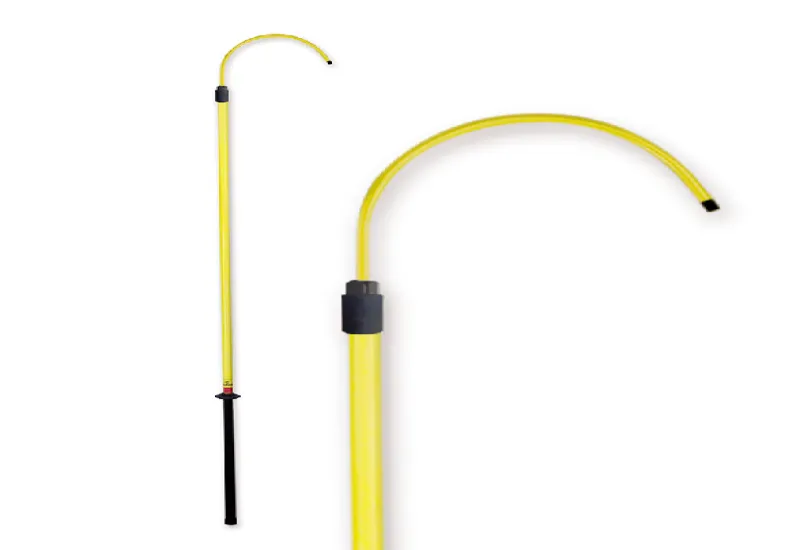
The electrical rescue hot stick is a specialized tool used in rescues involving electrical situations, such as accidents with high-voltage cables or electrical equipment. It is used mainly to deactivate or disconnect sources of electricity from a safe distance, without the rescuer being at risk of electrocution.
What is the electrical rescue hot stick used for?
- Disconnecting dangerous electrical sources
In situations where a person is in contact with fallen electrical cables or energized devices, the electrical rescue hot stick allows rescuers to cut or move aside cables or electrical components without having to approach them directly.
- Preventing electrocution
It serves to keep rescuers from coming into contact with electric current, which is crucial for safety during a rescue. Using the hot stick lets the rescuer act remotely and safely.
- Isolating hazardous areas
It is also used to move people or animals away from electrical sources, separating them from high-voltage cables or electrical installations that may be live and pose a danger.
Response to electrical accidents
It is useful in accidents involving fallen utility poles, vehicle accidents in which high-voltage cables are compromised, or any other situation where there are electrical hazards in an accessible area.
Key features of the electrical rescue hot stick
- Insulating material
The hot stick is generally made of non-conductive materials, such as fiberglass or reinforced plastic, to prevent electric current from passing through the tool and harming the rescuer.
- Extended length
Electrical hot sticks are long, often several meters, to ensure that the rescuer can stay at a safe distance while performing the rescue.
- Ease of handling
Despite its size, the hot stick must be lightweight and easy to maneuver so that rescuers can act quickly in critical situations.
Common use cases
- Rescues in traffic accidents where electrical cables have fallen on the vehicle or the road.
- Electrical storm incidents that cause high-voltage lines to fall.
- Rescue situations in industrial or construction areas where electrical hazards exist.