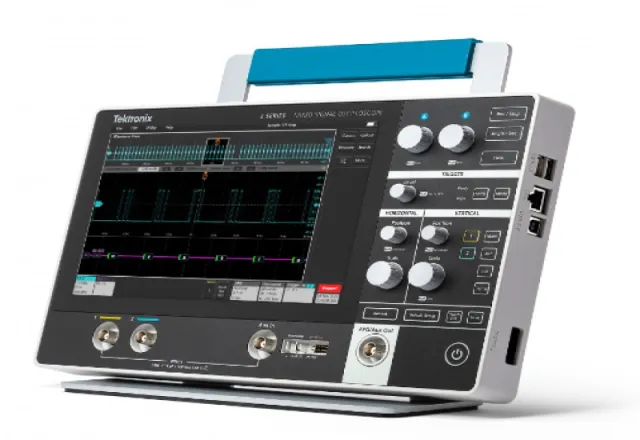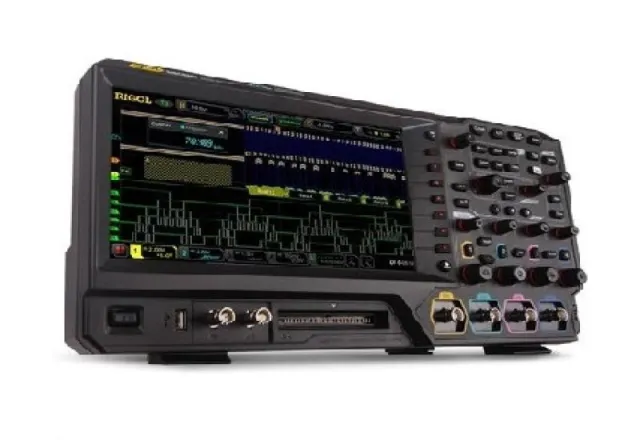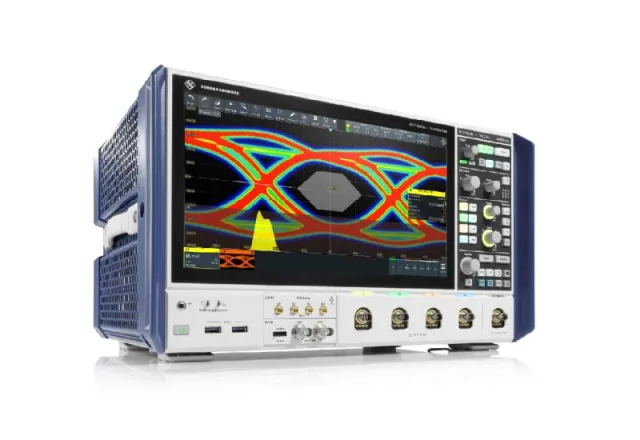
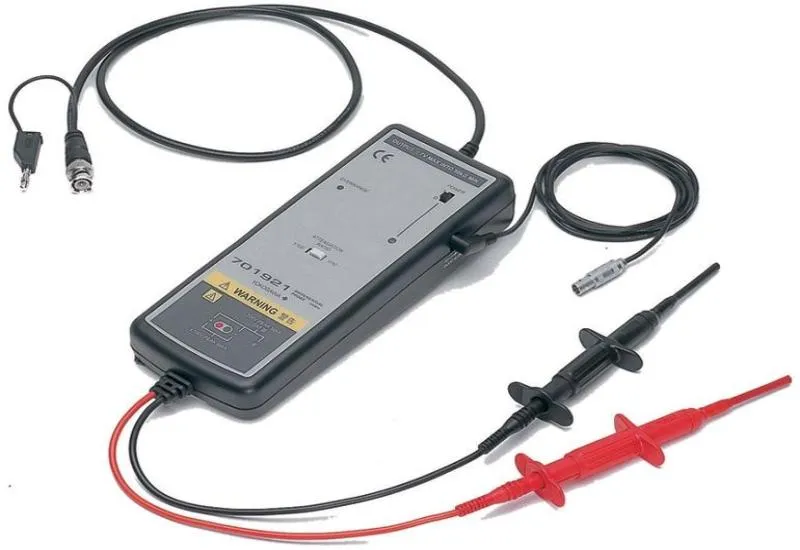
Oscilloscope probes are essential accessories used to connect the oscilloscope to the circuits or devices you want to measure. They allow electrical signals to be transmitted from the measurement point to the oscilloscope for display and analysis. These probes are designed to minimize the impact on the circuit under test while maintaining signal accuracy and integrity.
Some important aspects of oscilloscope probes are described below:
- Construction: Oscilloscope probes generally consist of a coaxial cable with a connector at one end that plugs into the oscilloscope and a probe tip at the other end that connects to the measurement point in the circuit. The probe tip can be of different types, such as a sharp needle tip, a spring tip or a hook tip, depending on the type of signal and the application.
- Capacitance and attenuation: Oscilloscope probes have a certain amount of parallel capacitance, which can affect measurements in high-frequency circuits. To counteract this effect, some probes come with attenuation settings that reduce the capacitance and improve accuracy in high-frequency measurements.
- Bandwidth: Oscilloscope probes are rated by their bandwidth, which is the maximum frequency at which the probe can measure accurately. It is important to use a probe with a bandwidth suited to the frequency of the signal being measured, since a low-frequency probe can attenuate and distort a high-frequency signal.
- Compensation: Oscilloscope probes must be compensated to ensure accurate measurements. This is done by adjusting a small capacitor at the probe tip using a calibrator provided by the oscilloscope. Compensation ensures that the probe response is flat across the frequency range of interest.
- Special probe types: In addition to standard probes, there are special types of oscilloscope probes for specific applications, such as high-voltage probes for measurements on high-power circuits, current probes for measuring currents instead of voltages, and differential probes for measuring the voltage difference between two points.
Oscilloscope probes are essential for obtaining accurate and reliable measurements on an oscilloscope. When selecting a probe, it is important to consider bandwidth, capacitance, attenuation and the type of application to make sure it suits your specific measurement needs.
What oscilloscope probes are used for
Oscilloscope probes are accessories used to connect the oscilloscope to the circuits or devices you want to measure. They transmit electrical signals from the measurement point to the oscilloscope, allowing them to be displayed and analyzed on the instrument’s screen.
These probes are essential for obtaining accurate and reliable measurements with the oscilloscope and play several important roles:
- Signal measurement: The main function of oscilloscope probes is to measure electrical signals in a circuit. The signals can be waveforms generated by electronic components or signals captured in active or passive circuits.
- Minimizing circuit loading: Oscilloscope probes are designed to have a high input impedance, which means they place minimal load on the circuit under test. This prevents the measurement from disturbing or altering the behavior of the circuit being measured.
- Adapting the signal to the oscilloscope: Probes adjust the measured signal so that it is suitable for the oscilloscope. For example, they can provide attenuation to reduce the signal amplitude and make sure it is within the oscilloscope’s measurement range.
- Compensation: Oscilloscope probes must be compensated to ensure accurate measurements. Compensation adjusts the probe to have a flat response across the frequency range of interest, ensuring accurate, calibrated measurements.
- Connecting to hard-to-reach points: Probes make it possible to measure signals at circuit points that may be physically difficult to reach or that are located in areas of high component density.
- Measuring high-frequency signals: Oscilloscope probes are designed to have adequate bandwidth for measuring high-frequency signals. This allows the oscilloscope to capture and display high-frequency waveforms accurately.
Oscilloscope probes are essential tools for proper use of the oscilloscope and for making accurate measurements on electronic circuits. They are a fundamental part of the setup and must be selected carefully to be compatible with your specific measurement needs. When using an oscilloscope, it is important to make sure you use the correct probe to obtain accurate and reliable results.