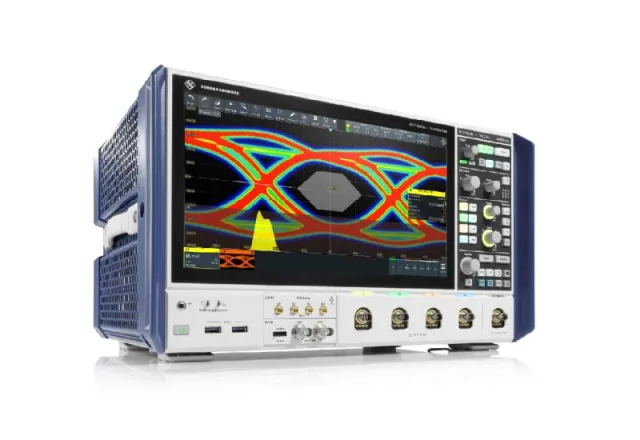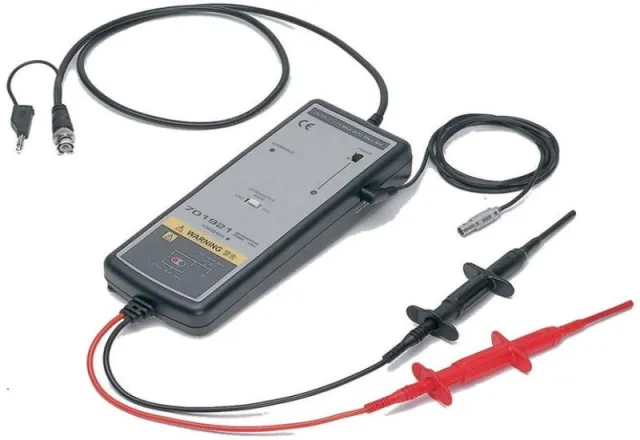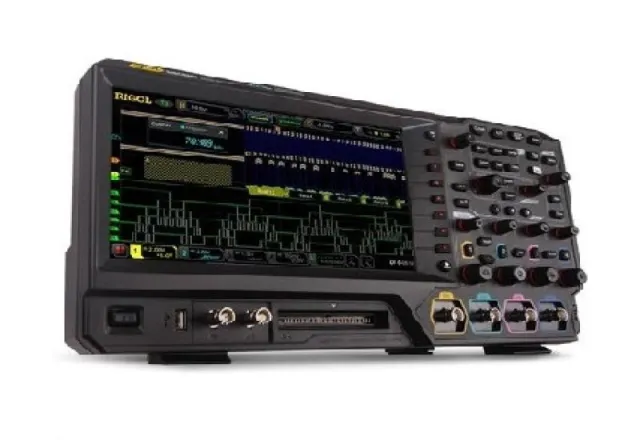
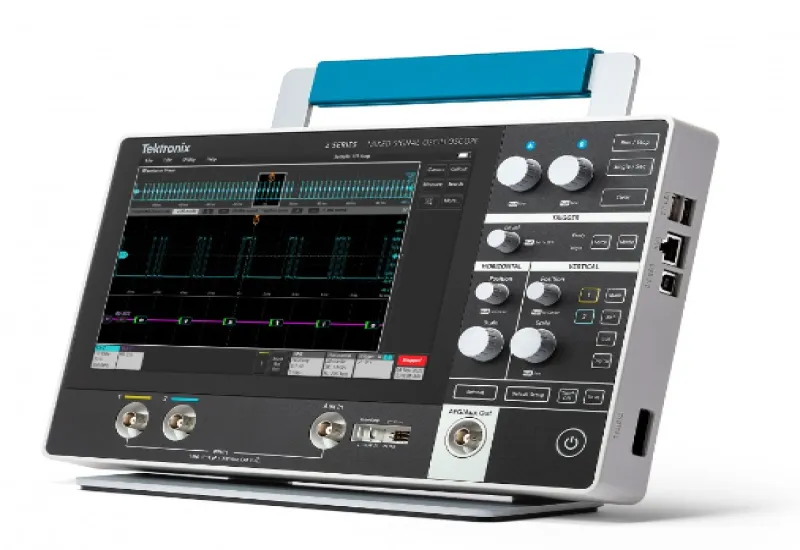
Achieve high-quality measurements. Some tests require professional-grade measurements in a more portable, stackable form factor. That is why we offer handheld oscilloscopes for rental and sale up to 1 GHz. We have a wide variety and constantly stock the latest models.
A handheld oscilloscope is an electronic device used to measure and display electrical signals. Unlike benchtop oscilloscopes, which are larger, permanent instruments, handheld oscilloscopes are designed to be compact, lightweight and easy to carry, making them ideal where mobility is important or space is limited.
These portable devices usually offer many of the same functions as traditional benchtop oscilloscopes, such as the ability to display waveforms and measure amplitude, frequency, rise time and other parameters of electrical signals. Some handheld oscilloscopes may also have additional functions, such as built-in multimeters, logic analyzers or signal generators.
Typical applications of handheld oscilloscopes include:
- Diagnosing and troubleshooting electronic systems in the field or at remote locations.
- Maintenance and repair of electronic equipment at different locations within a facility.
- Education and training in electronics, especially in mobile or educational lab environments.
- Real-time monitoring of signals and circuits in industrial, communication or control applications.
When choosing a handheld oscilloscope, it is essential to consider factors such as bandwidth (the maximum signal frequency it can measure), sample rate (how many samples per second it can acquire), battery life, user interface, and the presence of special features that fit your specific needs.
Considerations when choosing a handheld oscilloscope
The choice between a handheld and a benchtop oscilloscope depends on the user’s specific needs and the work environment in which the instrument will be used. Each type of oscilloscope has its advantages and disadvantages. Below are some of the reasons a handheld oscilloscope may be preferable in certain situations:
- Portability: As the name suggests, the main advantage of a handheld oscilloscope is that it can be easily carried and used at different locations. This makes it ideal for professionals who work in the field or in places with limited access, such as outdoors or in confined spaces.
- Small footprint: Handheld oscilloscopes are usually more compact than benchtop models, making them better suited to labs or workshops with limited space. They are also useful where space must be shared with other equipment or tools.
- Outdoor use: Handheld oscilloscopes are valuable in outdoor applications, such as in the field or in industrial environments, where measurements may need to be made in challenging environmental conditions.
- Battery power: Many handheld oscilloscopes are designed with rechargeable batteries, allowing them to operate without an external power supply. This makes them an ideal option where there is no nearby power outlet or for long-distance fieldwork.
- Education and learning: In educational or training settings, handheld oscilloscopes can be more convenient because they are easy to carry and use for hands-on demonstrations at different locations within a lab or classroom.
- Versatility: Some handheld oscilloscopes have additional functions, such as built-in multimeters, signal generators or logic analyzers, making them more versatile and useful in a variety of applications.
However, it is important to keep in mind that handheld oscilloscopes can also have some limitations compared with larger benchtop models. For example, they may have lower bandwidth, fewer input channels, or smaller and less intuitive interfaces. In addition, some benchtop models can offer superior performance and accuracy in certain specialized applications.
In summary, the choice between a handheld and a benchtop oscilloscope depends on the specific use and the user’s needs. Both types of oscilloscopes have their place and function in electronics and signal measurement.