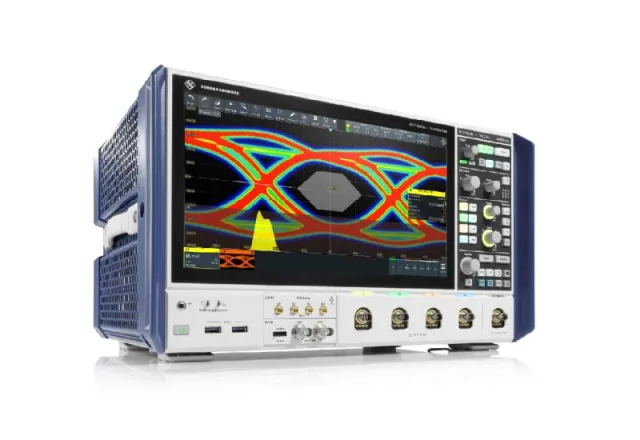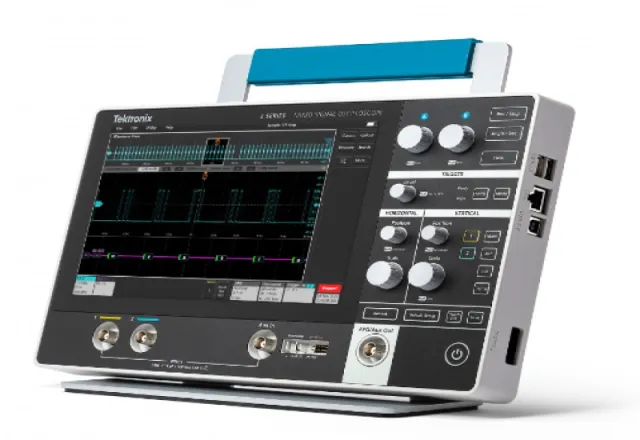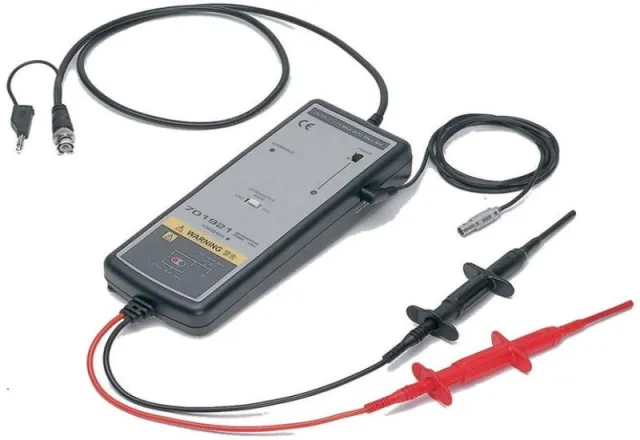
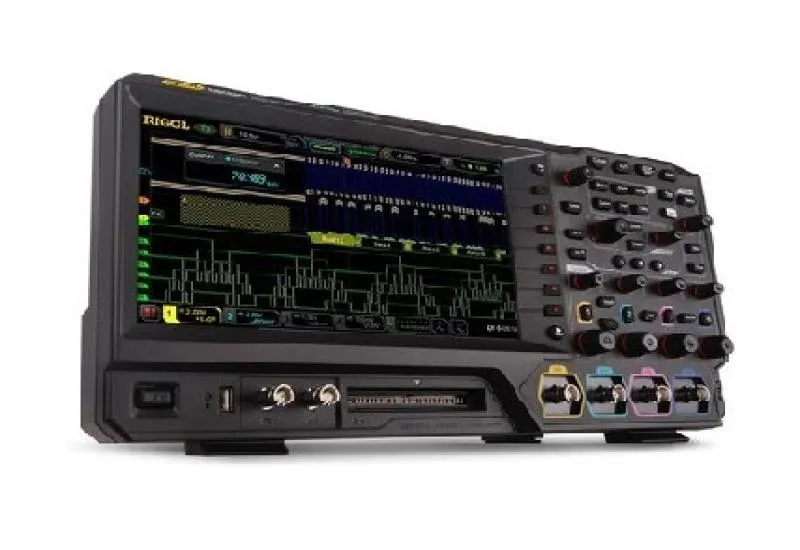
At Creativeit Group we have oscilloscopes for rental and sale to analyze and troubleshoot electrical circuits, design and verify prototypes, make precise measurements and evaluate the performance of electronic devices.
A general-purpose oscilloscope is a versatile and fundamental tool in electronics and related fields. It is used to view and analyze electrical signals as waveforms, providing valuable information about the behavior of electronic circuits and devices
The main functions and uses of a general-purpose oscilloscope are listed below:
- Signal display: The main function of the oscilloscope is to graphically display the waveform of an electrical signal as a function of time. This makes it possible to observe the patterns, amplitudes, frequencies, peaks and valleys of signals.
- Voltage measurement: Oscilloscopes can measure the voltage of an electrical signal accurately. They can measure peak amplitudes, average voltages and peak-to-peak voltages, as well as RMS (root mean square) values.
- Frequency analysis: With their ability to graphically represent signal frequencies, oscilloscopes make it easier to identify frequency components and detect harmonics in a signal.
- Waveform verification: Lets you verify whether a signal is distorted or affected by noise, which is useful for circuit debugging and electronic device development.
- Event synchronization: The Trigger function on the oscilloscope synchronizes signal capture with a specific event, making repetitive or stable signals easier to view.
- Rise and fall time analysis: Oscilloscopes can measure the time a signal takes to change from a low value to a high value (rise time) or from a high value to a low value (fall time). This information is essential for evaluating the performance of components and circuits.
- Math measurements: Modern oscilloscopes can perform mathematical calculations on captured waveforms, allowing operations such as addition, subtraction, multiplication, derivatives and integrals.
- Debugging and troubleshooting: Engineers and technicians use oscilloscopes to identify problems in electronic circuits, such as short circuits, open circuits, interference and component failures.
- Device performance evaluation: Oscilloscopes are used to evaluate the performance of electronic devices such as amplifiers, power supplies, integrated circuits and communication systems.
- Research and development: In research environments, general-purpose oscilloscopes are essential tools for studying signal behavior in a variety of applications and helping improve the design and efficiency of electronic circuits.
Typical features of a general-purpose oscilloscope include:
The general-purpose oscilloscope is an electronic measuring instrument widely used in electronics, engineering and related sciences. Its main function is to display electrical signals as waveforms, allowing engineers and technicians to analyze and diagnose problems in electronic circuits, as well as measure various signal characteristics.
- Display: The oscilloscope has a screen that shows signal waveforms in real time. These displays can be CRT (cathode ray tube) or LCD/LED, the latter being more common today.
- Channels: Oscilloscopes can have one or several channels, allowing several signals to be measured and displayed simultaneously. The most common oscilloscopes have 2 channels, but there are also models with 4 or more channels.
- Bandwidth: Specifies the oscilloscope’s ability to display signals of different frequencies. The higher the bandwidth, the better the representation of high-frequency signals.
- Sample rate: Indicates the number of points the oscilloscope can capture in a waveform. The higher the sample rate, the better the accuracy when displaying fast signals or signals with abrupt changes.
- Memory: Internal memory lets you store waveforms for later analysis and comparison.
- Math functions: General-purpose oscilloscopes usually include math functions, such as addition, subtraction, multiplication and FFT (fast Fourier transform) for signal analysis.
- Trigger: A function that synchronizes signal capture with specific events, making it easier to display stable waveforms.
- Interface and connectivity: Modern oscilloscopes often include USB and LAN ports and wireless connectivity options to transfer data and control the oscilloscope from a computer.
General-purpose oscilloscopes are essential tools for anyone working with electronics, since they make it possible to analyze and troubleshoot electrical circuits, design and verify prototypes, make precise measurements and evaluate the performance of electronic devices. They are found in research laboratories, educational settings and the electronics industry.