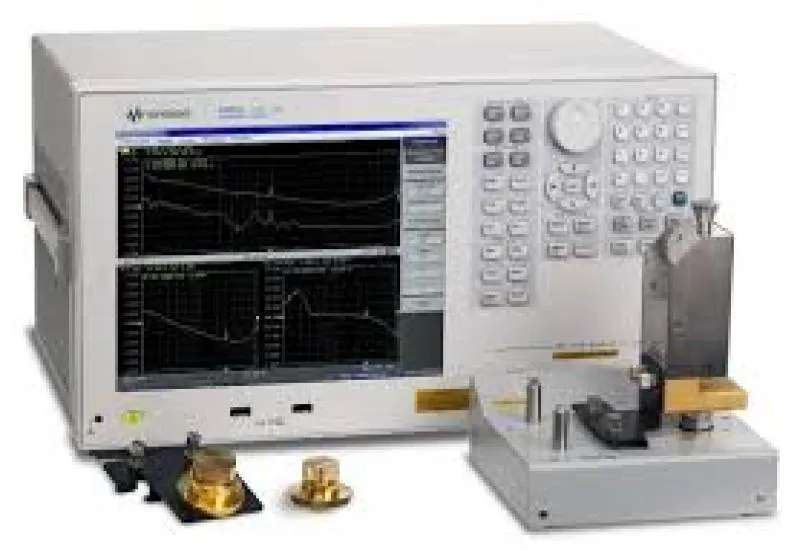
We perform electrical permittivity analysis of liquids and solids. Permittivity has several useful applications, which we describe below:
1. Material Selection for Electronic and Electrical Components
- Use: Permittivity plays a crucial role in the design and performance of capacitors, insulators, and other electrical components. By measuring permittivity, customers can make sure they select the right material to optimize the performance of their devices.
- Industries: Electronics, electrical engineering, telecommunications.
- Benefit: Ensure that devices such as capacitors and RF components perform optimally, providing efficient energy storage and signal transmission while reducing energy losses.
2. Improving Signal Transmission in Communication Systems
- Use: In communication systems (such as antennas, cables, or radar), the permittivity of the materials used in components such as waveguides, transmission lines, and substrates can significantly affect signal propagation, efficiency, and frequency response.
- Industries: Telecommunications, aerospace, defense.
- Benefit: By measuring and selecting materials with the right permittivity, customers can improve signal quality, reduce interference, and improve overall system performance.
3. Design of High-Performance Insulation Materials
- Use: A high dielectric permittivity is sought in materials used for insulation in high-voltage systems, motors, transformers, and other electrical equipment. These materials can prevent electrical breakdown and improve safety.
- Industries: Power generation, automotive (electric vehicles), manufacturing.
- Benefit: By measuring permittivity, customers can select insulating materials that prevent electrical leakage, increase reliability, and reduce energy losses in high-voltage applications.
4. Optimization of Antennas and RF Devices
- Use: In the design of antennas, microwave devices, and radar systems, permittivity directly influences how electromagnetic waves behave in materials. Measuring and selecting materials with the right permittivity helps optimize the performance of these devices.
- Industries: Aerospace, defense, communications, consumer electronics.
- Benefit: Improved antenna efficiency, reduced signal loss, and better microwave and RF device performance in terms of bandwidth, gain, and radiation patterns.
5. Material Characterization for Product Development
- Use: For product developers in various industries (automotive, consumer electronics, medical devices, etc.), understanding the permittivity of new or custom materials is key to creating high-performance products.
- Industries: Automotive, medical, consumer goods, industrial manufacturing.
- Benefit: Ensure that materials meet performance, regulatory, and safety standards. This can lead to more reliable products with greater durability and energy efficiency.
6. Quality Control and Manufacturing Consistency
- Use: For manufacturers, knowing the permittivity of the materials used in production ensures consistent material properties, which can affect manufacturing processes such as molding, casting, or 3D printing.
- Industries: Manufacturing, automotive, aerospace, 3D printing.
- Benefit: By measuring permittivity during production, manufacturers can maintain consistent quality across batches, reducing defects and improving product performance and customer satisfaction.
7. Environmental and Energy Efficiency Considerations
- Use: Materials with suitable permittivity values can contribute to energy efficiency and reduce the environmental impact of products. For example, permittivity influences the design of capacitors used in energy storage systems and the efficiency of insulating materials in energy-saving products.
- Industries: Green energy, construction, electronics.
- Benefit: Products with optimized dielectric properties can lead to lower energy consumption, longer product life, and a smaller environmental footprint.
8. Thermal Management in Electronics
- Use: In some applications, permittivity is related to how materials interact with electromagnetic fields, which in turn affects heat dissipation in electronic devices and power systems. Understanding permittivity can help improve thermal management solutions.
- Industries: Consumer electronics, automotive (electric vehicles), power electronics.
- Benefit: Better heat dissipation solutions, greater reliability, and improved performance in devices such as power transistors, processors, and batteries.
9. Development of Advanced Materials (for example, Metamaterials)
- Use: Metamaterials, which are materials engineered with unique electromagnetic properties, depend on specific permittivity values for their intended functions, such as cloaking, superlenses, or improved antenna performance.
- Industries: Research, advanced engineering, defense, telecommunications.
- Benefit: Accurate permittivity measurements enable the design of advanced materials for specialized applications, such as high-performance antennas, sensors, or cloaking layers.
The following are some of the benefits of having permittivity measurements:
- Demonstrate Performance Value: Highlights how accurate permittivity measurements can directly improve the performance of your products, such as by improving efficiency, reducing energy losses, or improving signal quality.
- Customized Solutions: Offers tailored material selection recommendations based on permittivity measurements, helping customers choose the best material for their specific needs.
- Cost Savings: Points out that selecting the right material with the correct permittivity can result in greater product durability, fewer failures, and fewer warranty claims, ultimately saving costs.
- Compliance and Safety: Emphasizes that knowing the permittivity can help customers meet industry standards and regulations, especially in areas such as safety, high-voltage systems, or medical devices.
- Offer Measurement Services: If your company can provide permittivity measurement services or measurement equipment, consider offering testing to help customers better understand their materials, which can lead to a long-term business relationship.