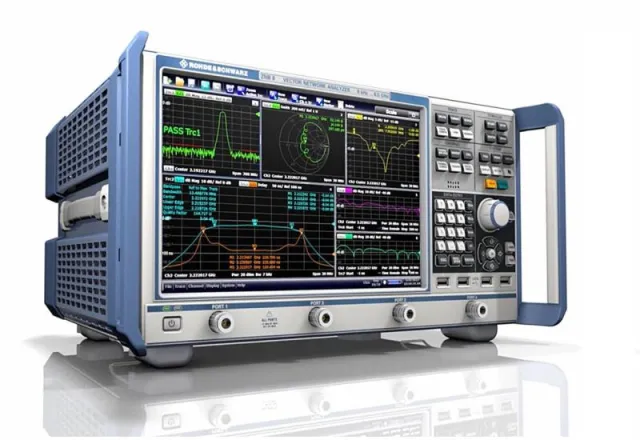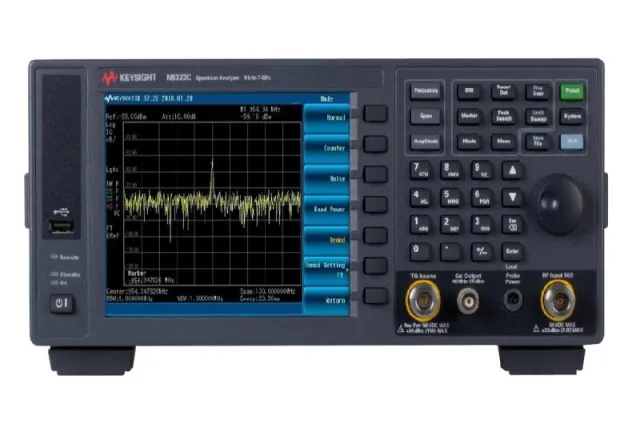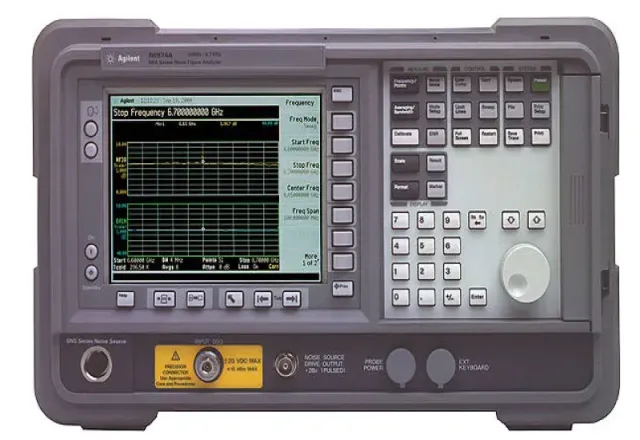
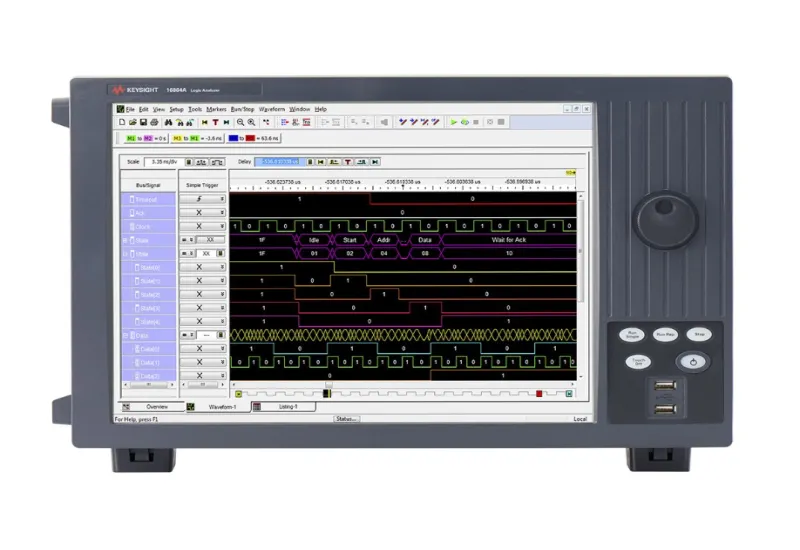
We offer a wide range of carefully selected logic analyzers from leading manufacturers. Our experts will work with you to understand your needs and explore all the options to find the best test and measurement equipment solution for you. We also offer certified pre-owned used equipment, providing options for any budget. Explore our range of logic analyzers below.
A logic analyzer is a device used in electronics and hardware development to analyze and debug digital circuits. Unlike an oscilloscope, which is used to measure and display analog signals, a logic analyzer focuses on analyzing digital signals, such as binary signals (0 and 1) in digital systems, microcontrollers, FPGAs, data buses and other logic circuits.
The logic analyzer is especially useful in situations where you need to investigate and understand the behavior of digital signals in complex, high-speed systems.
Some of the most common features and functions of a logic analyzer include:
1. Multiple input channels: Logic analyzers can have multiple input channels that allow several digital signals to be captured and analyzed at the same time. The number of channels varies by model and can range from a few to several hundred.
2. High sampling speed: Logic analyzers usually have a high sampling rate, which allows them to capture and analyze digital signals in high-speed systems and transient events.
3. Data capture and display: Captured data can be displayed as timing diagrams (time-domain waveform) and capture timing charts (time between events).
4. Protocol decoding: Many logic analyzers come with the ability to decode standard communication protocols such as I2C, SPI, UART, CAN, Ethernet and USB, among others. This simplifies communication analysis and makes it possible to identify and understand the transmitted data.
5. Triggers and filters: Logic analyzers let you set trigger conditions to capture specific events of interest. They can also apply filters to capture only certain patterns or sequences of signals.
6. Long-duration capture: Some logic analyzers can capture digital signals over long periods of time, which is useful for analyzing and debugging intermittent or long-duration problems.
Logic analyzers are essential tools for engineers and technicians who work on the design, development and maintenance of complex digital systems. They make it possible to debug problems in logic circuits, verify the operation of data buses, analyze communication protocols and understand the behavior of digital signals in critical systems. These devices are particularly valuable in embedded systems development, digital circuit design, hardware verification and, in general, in any application that requires detailed analysis of digital signals.
What a logic analyzer is used for
The logic analyzer is an essential tool in electronics and hardware development used to analyze and debug digital circuits.
Its main functions and uses are the following:
- Capture and display of digital signals: The logic analyzer lets you capture and display digital signals, such as binary signals (0 and 1), in electronic systems. This is useful for understanding signal behavior over time and verifying that signals are working correctly.
- Debugging and troubleshooting: The logic analyzer is especially useful for identifying and fixing problems in digital circuits. It lets you verify whether signal values are as expected and detect logic faults, transmission errors, timing problems and other anomalies.
- Communication protocol analysis: Many logic analyzers can decode and analyze standard communication protocols such as I2C, SPI, UART, CAN, Ethernet, USB, etc. This simplifies the analysis and debugging of communication systems and ensures that data is transmitted correctly.
- Performance optimization: The logic analyzer lets you measure and analyze signal propagation times in digital circuits. This is useful for optimizing system performance and ensuring that signals meet timing requirements.
- Hardware verification and validation: The logic analyzer is a valuable tool in the hardware verification and validation phase. It lets you make sure the circuit works correctly and meets design requirements before production or deployment in larger systems.
- Digital system development and design: Engineers use the logic analyzer during the development and design of complex digital systems, such as microcontrollers, FPGAs and ASICs. It helps them understand system behavior and make design adjustments and improvements.
- High-speed measurements: Logic analyzers can capture high-speed digital signals, which is essential for analyzing complex, high-speed digital systems such as those used in data communications, processors and networks.
The logic analyzer is a versatile and powerful tool for analyzing and debugging digital circuits. It is fundamental in the design, development, verification and validation of digital hardware and lets engineers ensure the correct operation and performance of electronic systems in the digital domain.
Applications
The logic analyzer has a wide variety of applications in electronics and hardware development.
Some of the main applications of the logic analyzer include:
Digital circuit debugging: This is one of the most common applications of the logic analyzer. It lets you identify and solve problems in digital circuits, such as logic faults, timing problems, transmission errors and other design errors.
Hardware verification and validation: The logic analyzer is used to verify and validate the correct operation of digital hardware before production or deployment in larger systems.
Data bus analysis: It lets you analyze data traffic on communication buses such as I2C, SPI, UART, CAN, USB, etc. It makes the transmitted data easier to understand and helps identify communication problems.
Embedded systems development: The logic analyzer is essential in the development and debugging of embedded systems based on microcontrollers, FPGAs and ASICs. It lets you understand system behavior and improve the design.
Performance optimization: It lets you measure and analyze propagation times, delays and other timing aspects in digital systems. This is useful for optimizing performance and ensuring that signals meet timing requirements.
Communication protocol analysis: Many logic analyzers can decode and analyze standard communication protocols, which simplifies the analysis and debugging of communication systems.
Research and development: In research and development, the logic analyzer is a valuable tool for studying and experimenting with different digital circuit configurations.
Digital control system analysis: It lets you analyze and debug digital control systems, such as motor control systems, automation systems, etc.
Standards compliance verification: In some cases, the logic analyzer is used to verify compliance with certain standards or specifications in digital systems.
Intermittent problem analysis: The logic analyzer is useful for capturing digital signals over long periods of time, which makes it easier to analyze intermittent problems that are difficult to reproduce.
Overall, the logic analyzer is a versatile and powerful tool for analyzing and debugging digital systems. Its ability to capture and analyze digital signals in real time makes it an essential tool for engineers and technicians working on the development, design and maintenance of digital hardware and electronic systems.