A grounding cluster is a term used in the field of electricity and electrical protection, applying the standards IEEE 81, IEEE 142, IEC 60364 and NOM‑001‑SEDE (Mexican electrical installations standard). It is used especially in industrial and commercial electrical systems or large installations. It refers to a system or set of ground connection points whose purpose is to ensure electrical safety and protect equipment and people against electrical faults.
To have a good protection system, it is necessary to carry out tests that help us determine that it works properly. These tests make it possible to verify the effectiveness and safety of the ground connection, ensuring that current can flow properly to earth in the event of an electrical fault.
What is grounding?
Grounding (or earthing) is the process of connecting parts of an electrical system (such as metal structures, equipment and cables) to the ground by means of a conductor. This connection allows electric current to have a safe path to earth in the event of an insulation failure or short circuit, thus avoiding the risk of electric shock, fire or equipment damage.
What is a “grounding cluster”?
A grounding cluster is a set or grouping of several ground connection points distributed throughout an installation. This cluster can consist of several electrodes or grounding systems connected to each other, in order to provide a common ground reference for the entire electrical system of the installation.
In simple terms, a grounding cluster** is a network of interconnected conductors and electrodes that allows the ground connection to be distributed more efficiently and safely.
What is a grounding cluster used for?
1. Personal safety:
The main purpose of the grounding cluster is to protect people from electric shock in the event of a system fault. If a piece of equipment or metal structure (for example, a generator, transformer or electrical panel) suffers an internal fault (such as a short circuit to ground), the current is directed to the grounding system, reducing the risk of current flowing through people.
2. Equipment protection:
By providing a low-impedance path for current to flow to ground, electrical equipment is protected from possible damage due to overloads, short circuits or ground faults. This helps preserve equipment service life and minimize repair costs.
3. Electrical system stability:
A well-designed grounding system, with an appropriate cluster, helps maintain the stability of the entire electrical system, helping to avoid dangerous voltage fluctuations and reducing the risk of power grid failures.
4. Electromagnetic interference (EMI) reduction:
A well-designed grounding system also helps minimize **electromagnetic interference**. This is especially important in facilities containing sensitive equipment, such as telecommunications systems, computers or medical equipment.
5. Regulatory compliance:
In many regions, electrical safety regulations require installations to have an adequate grounding system. A properly sized grounding cluster helps meet these regulations, ensuring that the installation is safe and meets legal requirements.
6. Minimizing damage during storms or electrical faults:
During electrical storms, lightning or power grid faults, a good grounding system helps dissipate energy safely. This is especially relevant for installations located in storm-prone areas.
Components of a grounding cluster
A grounding cluster can include the following components:
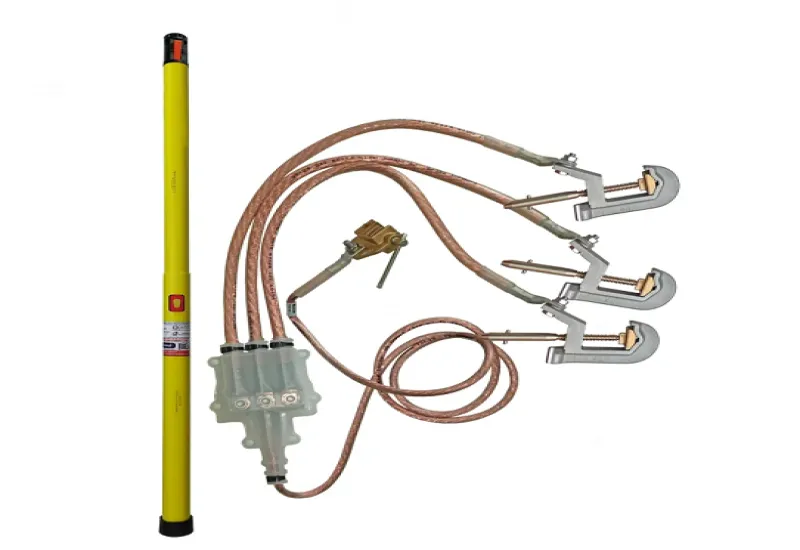
– Grounding electrodes: These can be rods, copper meshes, ground cables, etc., which are driven into the soil to create a good connection with the earth.
– Ground connections: Conductors that connect the metal parts of the system (such as equipment, distribution panels or structures) to the grounding electrodes.
– Grounding conductor: The cable that connects all grounding points to each other and to the central ground terminal.
– Monitoring system: In more complex installations, monitoring systems are sometimes used to verify ground resistance and make sure there are no faults in the grounding system.
When is a grounding cluster used?
The use of a grounding cluster is common in situations where there is a large extent of electrical installations, such as:
– Industrial plants with multiple pieces of connected equipment and machinery.
– Electrical substations that require a distributed ground connection.
– Telecommunications facilities or data centers, where control of electromagnetic interference is critical.
– Renewable energy systems such as solar or wind farms, which also need a good grounding system.