Thermal Shock and Cycling Tests Under Partial Vacuum
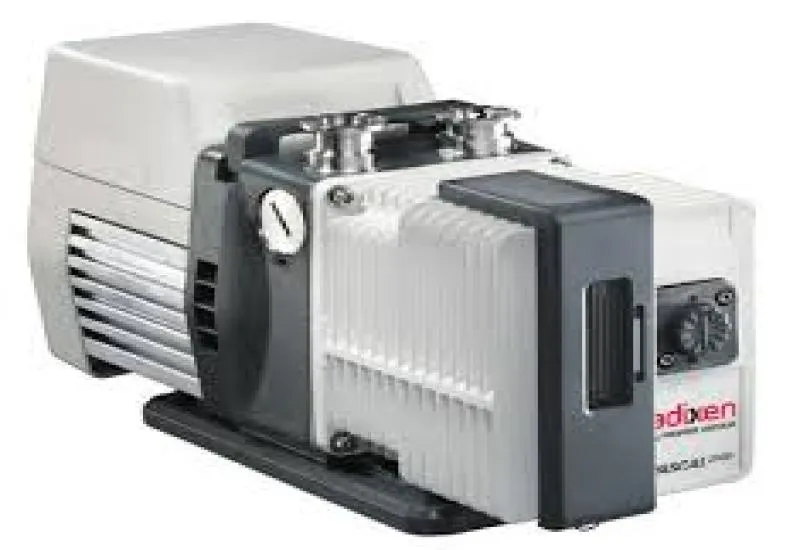
We perform thermal environmental tests in an acrylic vacuum chamber combined with an Alcatel Pascal 2010SD pump, which makes it possible to simulate partial vacuum conditions, expansion of internal gases, extreme altitudes and scenarios where atmospheric pressure is significantly reduced. These tests reveal behaviors that cannot be observed under normal conditions, such as internal expansion, deformation from depressurization or behavior changes in sealed components.
The interaction between vacuum and temperature produces unique effects: trapped gases expand more aggressively, encapsulated packages show variations in internal stress, and certain materials undergo structural changes due to reduced convective heat transfer. This is ideal for evaluating components that will be used in aircraft, air transport, mountain environments or special engineering applications.
Together with the speed of the Hioki 8860, with 20 MS/s capability and up to 10 analog and digital channels, it can detect electrical phenomena under these conditions, such as micro-shorts caused by expansion, internal discharges or instabilities that occur when pressure changes. At partial vacuum, these events can be very brief and hard to capture; however, the recorder’s high speed makes it possible to view microsecond signals and electrical transients associated with pressure-temperature interaction.
As part of the service, we deliver a complete technical report with the vacuum record, thermal behavior plots, photographic evidence, analysis of the DUT’s behavior and detailed documentation of the test process. This level of traceability ensures the customer knows precisely how their component responded to partial vacuum combined with thermal variations.
In all of our environmental analyses and laboratory tests where temperature is a critical parameter, we guarantee metrological control through in-house verification of our thermal systems. Each test is backed by temperature validation using our dry-block calibrator, with an operating range of -30 °C to 150 °C, resolution of 0.01 °C, thermal stability of ±0.02 °C and display accuracy of ±0.1 °C. We also evaluate block uniformity (horizontal ≤ ±0.05 °C) and the controlled vertical gradient, which ensures that measurements remain within the established uncertainties. This approach allows us to confirm the stability, uniformity and accuracy of the test conditions, providing reliable, traceable and technically supported results. The expanded uncertainty of the system is determined as a function of the operating point, the sensor under test and the process conditions.