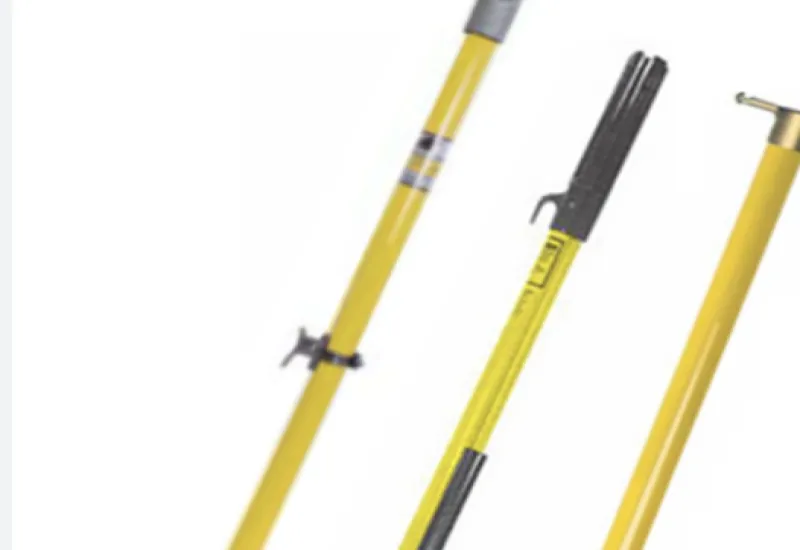
We have shotgun-type hot sticks for sale or rent, used mainly in inspection work to remove XLP cable cones, and for maintenance or cleaning at height or in hard-to-reach areas. These hot sticks have a specific design that allows other objects or tools to be handled from a distance, which makes them very useful in many fields. If you are interested in acquiring one through us, we will provide an immediate quote; it is a pleasure to offer it to you for the protection of your life.
Some of the most common uses of shotgun-type hot sticks are:
Inspection and cleaning of power lines: In the electrical sector, they are used to clean or inspect cables and connections at great heights without the need for ladders or cranes.
Telecommunications system maintenance: On communication towers or antennas, these hot sticks allow operators to make adjustments, take measurements or perform maintenance without having to climb.
Street lighting systems: To change bulbs or maintain lamps in elevated locations (such as light poles), the hot sticks make it easy to reach these points without the need for aerial work platforms.
Cleaning windows or facades: When cleaning the windows of tall buildings, these poles can reach difficult areas without risk to workers.
Agriculture: They are used to harvest fruit or produce that grows at great heights, such as pears or apples, or to prune branches without having to climb.
These shotgun-type hot sticks have several features that make them effective tools for work at height or in hard-to-reach places
Telescopic design
Adjustable length: Shotgun-type hot sticks are usually telescopic, which means their length can be adjusted depending on the needs of the job. This allows the user to extend the pole to reach the desired heights or shorten it for easier transport. The hot stick we have in stock is lightweight, telescopic (adjustable in length) and robust, which makes it easy to handle. The shotgun-type hot stick is used in the electrical sector mainly to perform maintenance and repair work on high-voltage power networks, without workers having to physically approach energized equipment. This type of hot stick makes it possible to handle and operate switches, disconnectors, fuses and other electrical control devices from a distance, minimizing the risk of direct contact with energized parts.
Features and use:
Insulation: The shotgun-type hot stick is usually made of insulating materials that withstand high voltages, such as fiberglass or polymers, which prevent the passage of electric current. This is essential to ensure the safety of the worker during operation.
Design: Its design is similar to that of a shotgun or long pole, with one end that may have a hook, clamp or specialized mechanism for handling switches. This allows operators to actuate electrical devices from a distance.
Remote switch operation: It is used to operate disconnect switches and fuses in energized installations. Operators use it to open or close circuits without having to approach the equipment, which reduces exposure to electrical risk.
Safety: The main objective of the shotgun-type hot stick is to protect personnel from exposure to dangerous voltages, since it can operate on high-voltage networks (for example, 110 kV or more) without operators needing to be close to energized lines or equipment.
Operation: From a safe distance, the worker can operate the hot stick to open or close a switch, and in this way carry out power cut-off tasks or control maneuvers. On some models, the end of the hot stick has a “claw” or gripping mechanism that hooks onto switches or disconnectors to operate them.
Inspection and measurement: Some hot sticks are also equipped with accessories that allow detection of the presence of voltage or visual inspections, which is useful in electrical networks where continuity of service must be ensured without putting personnel safety at risk.
Advantages:
Safety: Allows switching operations on high-voltage networks without having to physically approach energized installations.
Remote access: Makes it easier to operate devices located in hard-to-reach places and to handle work at height more safely and efficiently.