VLF INSULATION TESTING OF CABLES IN MONTERREY
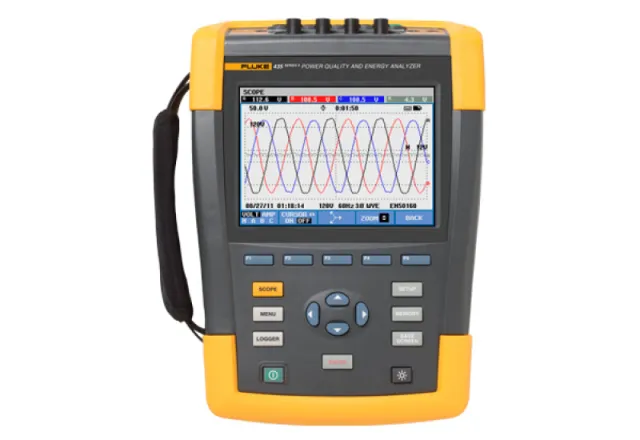
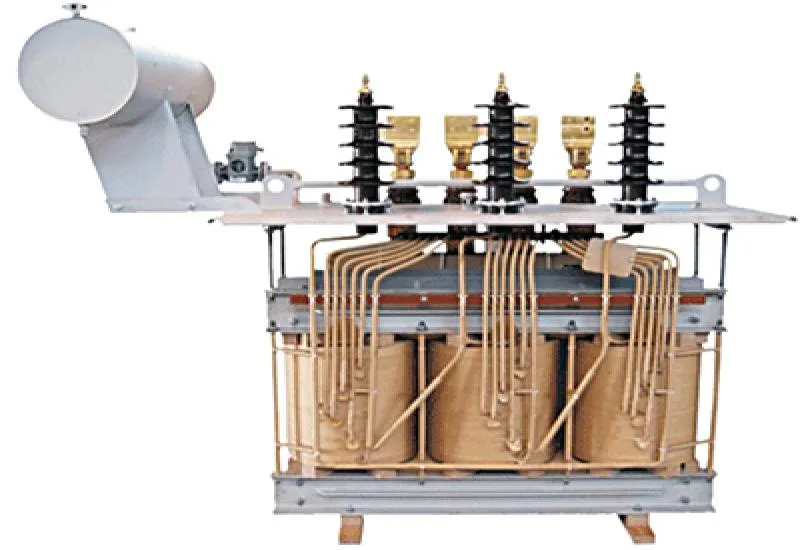
Megger-type insulation analysis, hipot and VLF insulation testing in the Monterrey area for transformers, motors and windings. Low-frequency testing of cables and transformers in accordance with IEC 61557‑2:2023, IEC 60076‑3 and IEC 60404‑12:2023. We travel throughout Mexico. Our staff has experience in hazardous areas such as oil platforms and mining. For rentals, we handle only professional equipment: Fluke, Megger, Metrel. We use the current standards, and we bring printed copies to every job we perform.
We are members of the IEEE (Institute of Electrical and Electronics Engineers) and of the IEEE Dielectrics and Electrical Insulation Society (DEIS) #94801861. This gives us access to current standards, professional forums, and a variety of research material.
Measurements we perform on insulating materials:
Insulation measurement functions:
Megger and VLF insulation resistance measurement.
Insulation resistance testing with step voltage.
Dielectric strength (withstand voltage) testing.
Diagnostic testing (PI, DD, DAR).
R(t) graph plotting.
Capacitance measurement.
Voltage measurement.
Insulation tester features:
Measurement range up to 10 teraohms.
Wide range of DC test voltages: From 500 V to 10,000 V in 25 V steps.
Dielectric strength voltage: insulation testing with programmable ramp voltage from 500 V to 10 kV and programmable threshold current.
Step voltage: insulation resistance measurement with five proportionally selected discrete test voltages and a programmable timer for each step.
Automated testing: PI, DD and DAR calculations with automated resistance ranges. All data is displayed during a single measurement.
Guard test terminal: for eliminating potential surface leakage currents.
Fault location: the fully programmable step voltage and dielectric strength voltage test functions help diagnose insulation faults.
R(t) graph: real-time plotting function of resistance versus time to graphically illustrate a material’s response to an applied test voltage.
Built-in timer: programmable timer from 1 s to 100 min. Automatic discharge of the test object once the test has finished.
Quick testing: 5 mA current source for fast charging of capacitive loads.
VLF testing up to 60 kV.
Accurate: selectable noise rejection filters and shielded test leads included in the standard kit ensure measurement accuracy.
MEGGER MEASUREMENT METHODS
a) SHORT-TIME METHOD.- Consists of connecting the Megger instrument to the equipment to be tested and operating it for 60 seconds. The main application of this method is on small equipment and on equipment that does not have a notable absorption characteristic, such as circuit breakers, cables, switchgear, etc.
b) TIME-RESISTANCE OR DIELECTRIC ABSORPTION METHOD.- Consists of applying the test voltage for a period of 10 minutes, taking readings at 15, 30, 45 and 60 seconds, and at 2, 3, 4, 5, 6, 7, 8, 9 and 10 minutes. Its main application is on power transformers and large rotating machines, given their notable absorption characteristics.
The insulation resistance measurement is in itself a potential (voltage) test, so it must be restricted to appropriate values that depend on the rated operating voltage of the equipment under test and on the condition of its insulation. If the test voltage is too high, it can cause stress on the insulation. The DC test voltages commonly used are 500 to 5,000 volts.
Insulation resistance readings normally decrease when high potentials are used; however, for insulation in good condition, similar values will be obtained at different test voltages. If insulation resistance values drop significantly as the test voltage is increased, it may indicate imperfections or cracks in the insulation, possibly aggravated by dirt or moisture, although the presence of moisture combined with dirt alone can also cause this phenomenon.