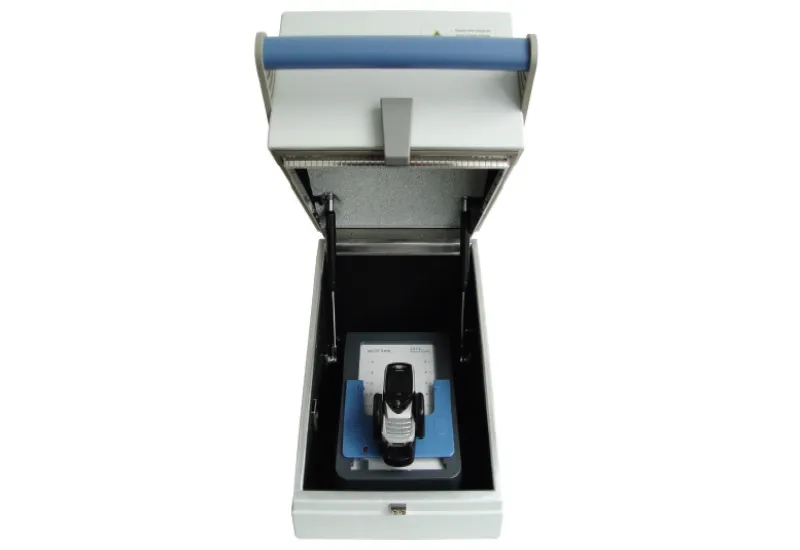
Our company Creativeit Group offers you the rental of this excellent tool, the 4921 RF Shield Faraday cage. These cages are commonly used in environments where protection against electromagnetic interference is needed or to ensure the confidentiality of electromagnetic signals. For example, Faraday cages are used in the electronics industry, in laboratories, in test rooms for sensitive equipment, and in the construction of shielded rooms to protect against external electromagnetic interference.
What is a Faraday cage?
In the vast world of physics, one of the most interesting concepts is the Faraday cage. This is a structure that can protect its interior from external electric fields. It is used in numerous practical applications in our daily lives, often without us realizing it exists.
History and Concept
The Faraday cage takes its name from the British scientist Michael Faraday, who invented it in 1836. Faraday demonstrated that an electric charge placed on a closed conductor is distributed over the surface of the conductor and has no effect on the interior. This demonstration was the first time the principle of electromagnetic shielding was understood.
A Faraday cage is, in simpler terms, an enclosure made of a conductive material that completely surrounds a space. Electric fields exert forces on electric charges, and the Faraday cage takes advantage of this property to redistribute the charges on its surface, neutralizing the effects of the electric field inside.
How the Faraday Cage Works
A Faraday cage works thanks to the property of conductors that allows electric charges to move freely. When an external electric field strikes the cage, the free charges in the conductor rearrange themselves to counteract this field. This is because charges of the opposite sign to the external electric field move toward the outer surface of the cage, while those of the same sign move away, heading toward the inner surface.
As a result, the charge distribution in the cage generates its own electric field that cancels the external field inside the cage. This phenomenon is known as electromagnetic shielding and is applied in many contexts, from protecting electronic equipment to safety when handling hazardous materials.
In the next part of the article, we will take a closer look at the practical applications of Faraday cages and analyze their role in modern technology.
Applications of the Faraday Cage
The protection offered by a Faraday cage is of great importance in many contexts of our daily lives and in various technological and scientific fields.
- In technology, the Faraday cage is used to protect sensitive electronic equipment. Components of computers and other electronic devices are often enclosed in Faraday cages to protect them from electromagnetic interference.
- In medicine, MRI rooms in hospitals are designed as Faraday cages to prevent external electromagnetic waves from interfering with medical images.
- Faraday cages are also used in scientific experiments that require an environment free of electromagnetic interference.
- In addition, airplanes are natural Faraday cages. The metal fuselage of the aircraft protects passengers and the aircraft’s electronic systems from lightning and electromagnetic interference.
Conclusion
The Faraday cage is a fascinating concept in physics with a wide range of practical applications. This simple structure protects us from the harmful effects of electromagnetic fields, ensuring that our electronic devices work properly and providing a safe environment for a variety of activities and scientific experiments.
Despite being a 19th-century invention, the Faraday cage continues to be relevant in our daily lives and will remain an essential component in many areas of technology and science for the foreseeable future. This is a testament to the genius and vision of its inventor, Michael Faraday, and to the power and importance of the fundamental principles of physics in our world.